
A writer may have something worthwhile to communicate and yet weaken it through the manner in which it is expressed. An idea that could have been conveyed in a few well-chosen words is stretched into an elaborate sentence. An ordinary observation is surrounded by unnecessary qualifications. A simple expression is exchanged for a more complicated one, not because the latter is more accurate, but because it appears more sophisticated.
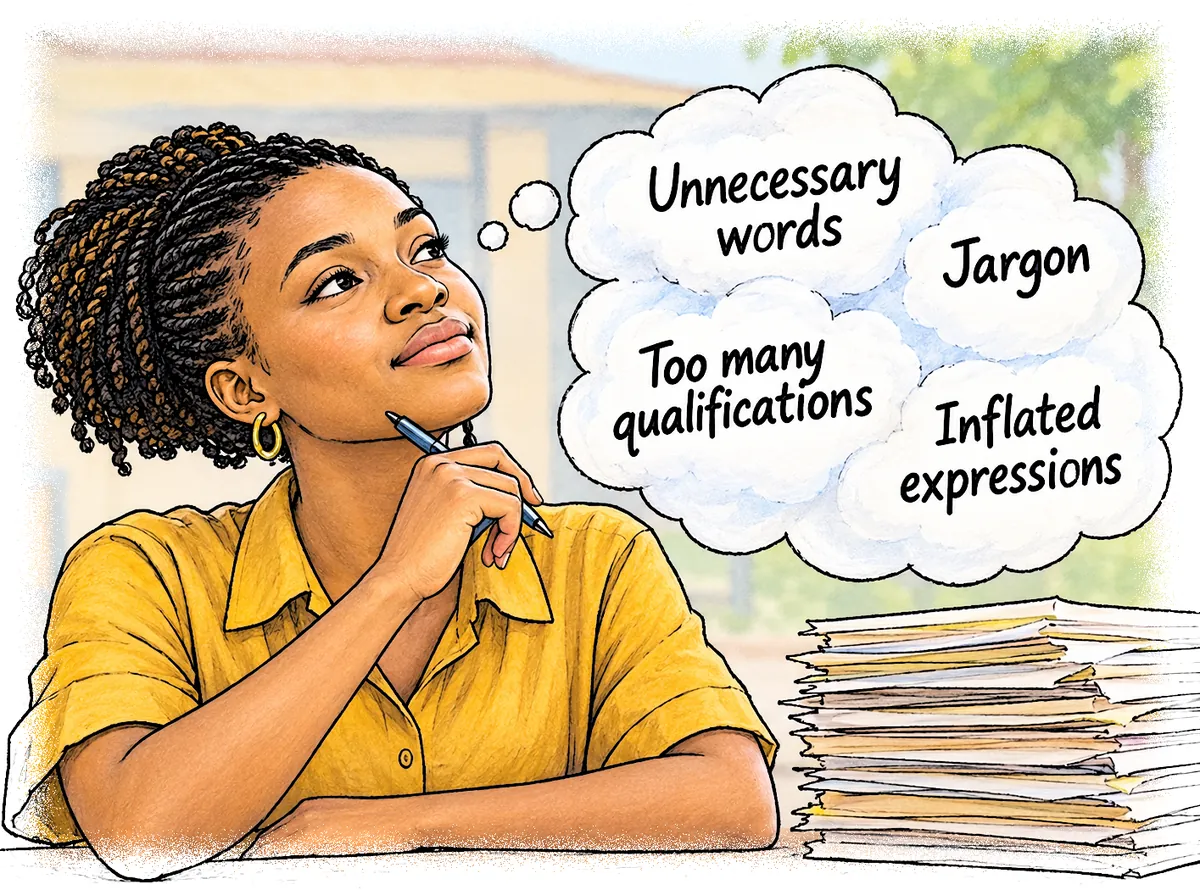
This is clutter. It occurs when unnecessary language gets in the way of meaning. It may be found in individual words, phrases, sentences or entire paragraphs. Sometimes it comes from an excessive use of adjectives and adverbs; at other times, it appears in inflated expressions, fashionable jargon, needless explanations and constructions that make the reader work harder than the thought requires.
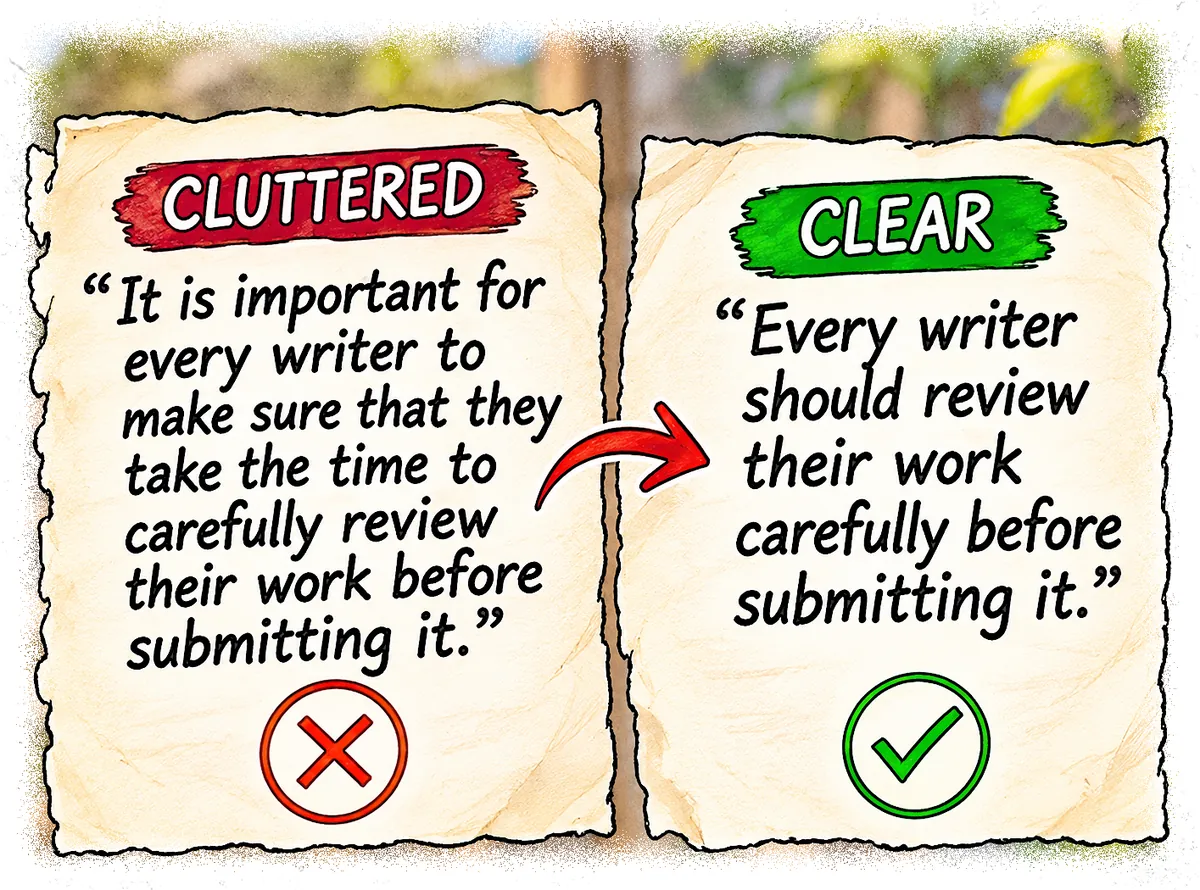
Consider this sentence:
"It is important for every writer to make sure that they take the time to carefully review their work before submitting it."
Now consider:
"Every writer should review their work carefully before submitting it."
The second sentence communicates the same instruction without the unnecessary preamble. The first is not grammatically defective, but it is encumbered by expressions that contribute little to its meaning. The words "it is important," "make sure that" and "take the time to" could all be reconsidered. The sentence does not need all that language to make its point.
The difficulty with clutter is that it often goes unnoticed. We become accustomed to certain expressions and use them without examining their usefulness. We write "at this point in time" when we mean "now," "due to the fact that" when we mean "because," and "in the event that" when we mean "if." These expressions are not necessarily wrong, but their habitual use can make our writing cumbersome.
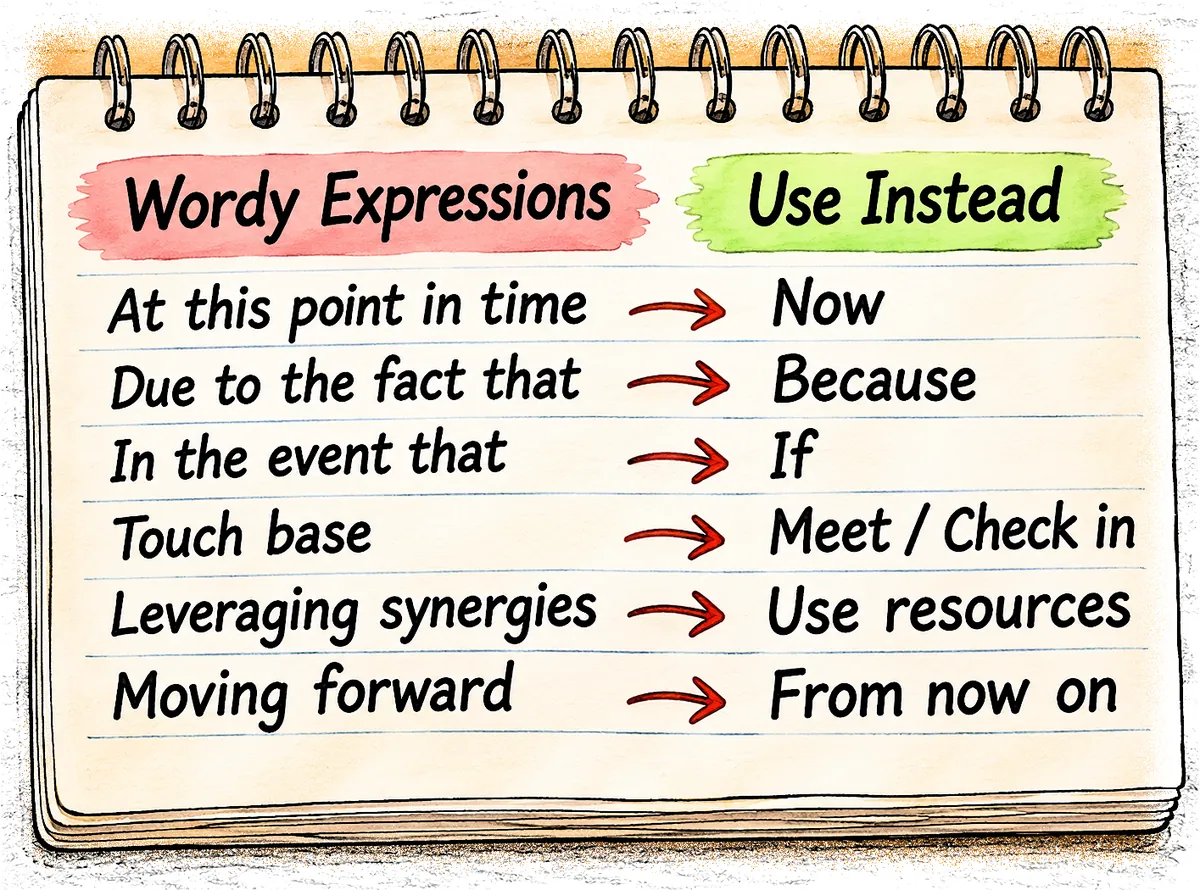
There is also the tendency to employ inflated professional language. An ordinary discussion becomes an opportunity to "touch base"; using available resources becomes "leveraging synergies"; and planning for the future becomes "moving forward." Such expressions may have their place in particular settings, but they can also become substitutes for clear communication. A writer should not mistake the appearance of sophistication for the substance of good expression.
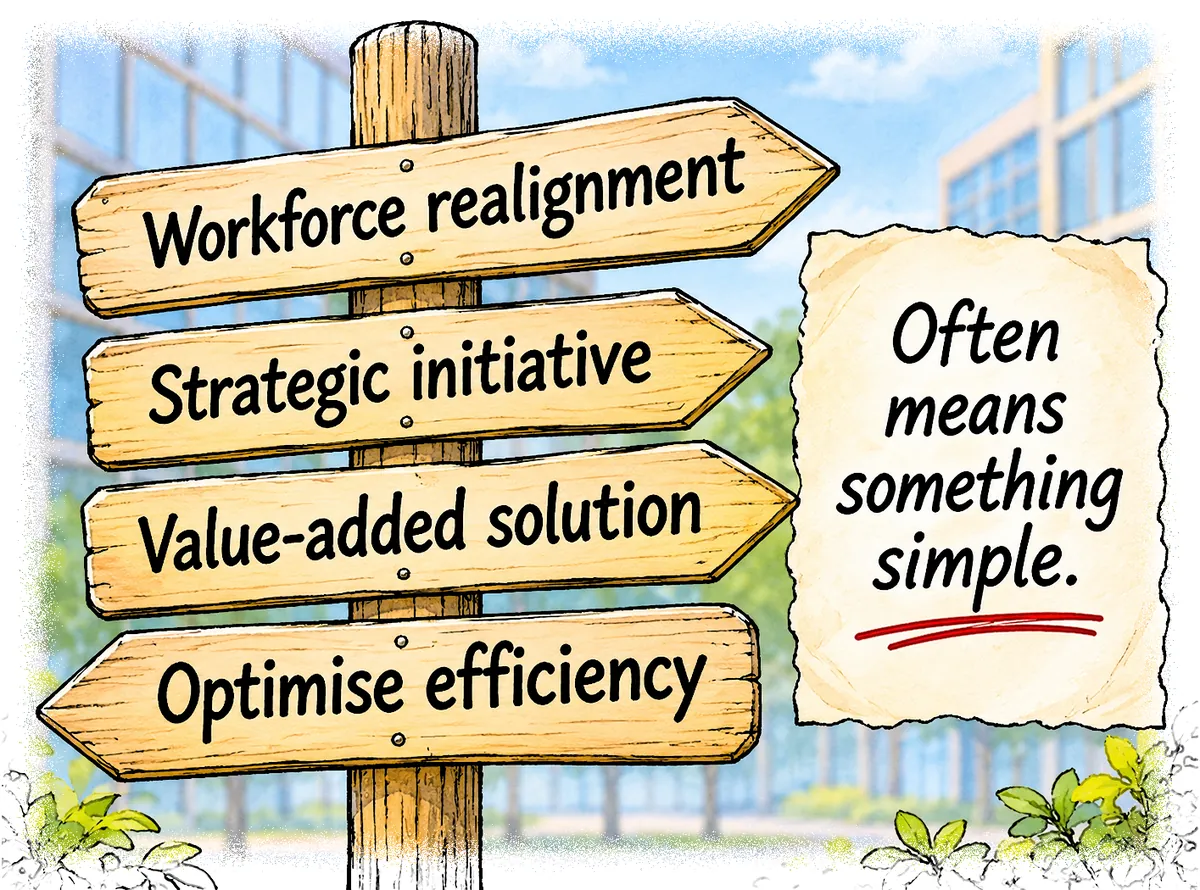
Clutter can be more than a stylistic inconvenience. It can obscure responsibility, disguise uncomfortable truths and make an otherwise straightforward statement difficult to understand. When an organisation dismisses employees and describes the decision as a "workforce realignment," the language may soften the announcement, but it also distances the reader from what has actually happened. There is a place for tact and diplomacy, but neither should become an excuse for obscurity.
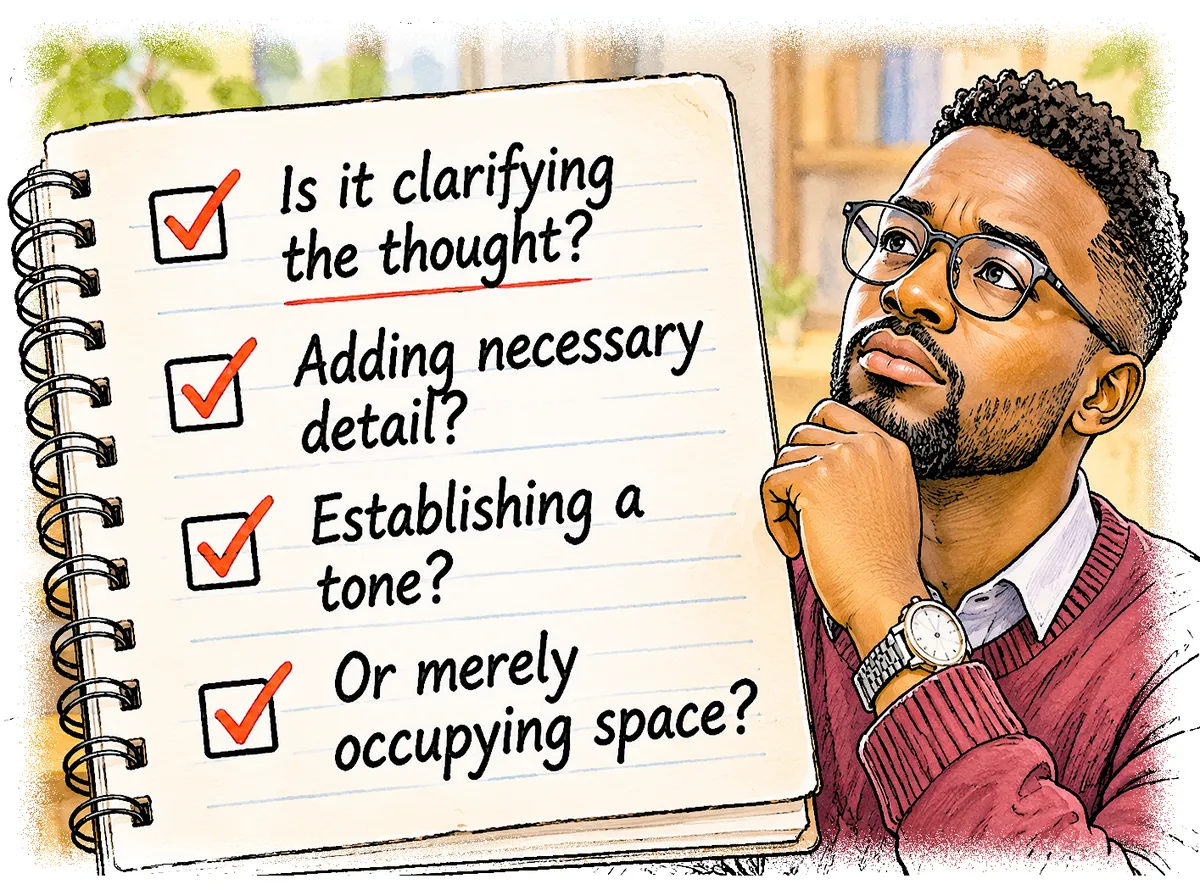
The writer must therefore learn to examine not only what has been written, but what the writing is doing. Is the expression clarifying the thought, adding necessary detail or establishing a particular tone? Or is it merely occupying space?
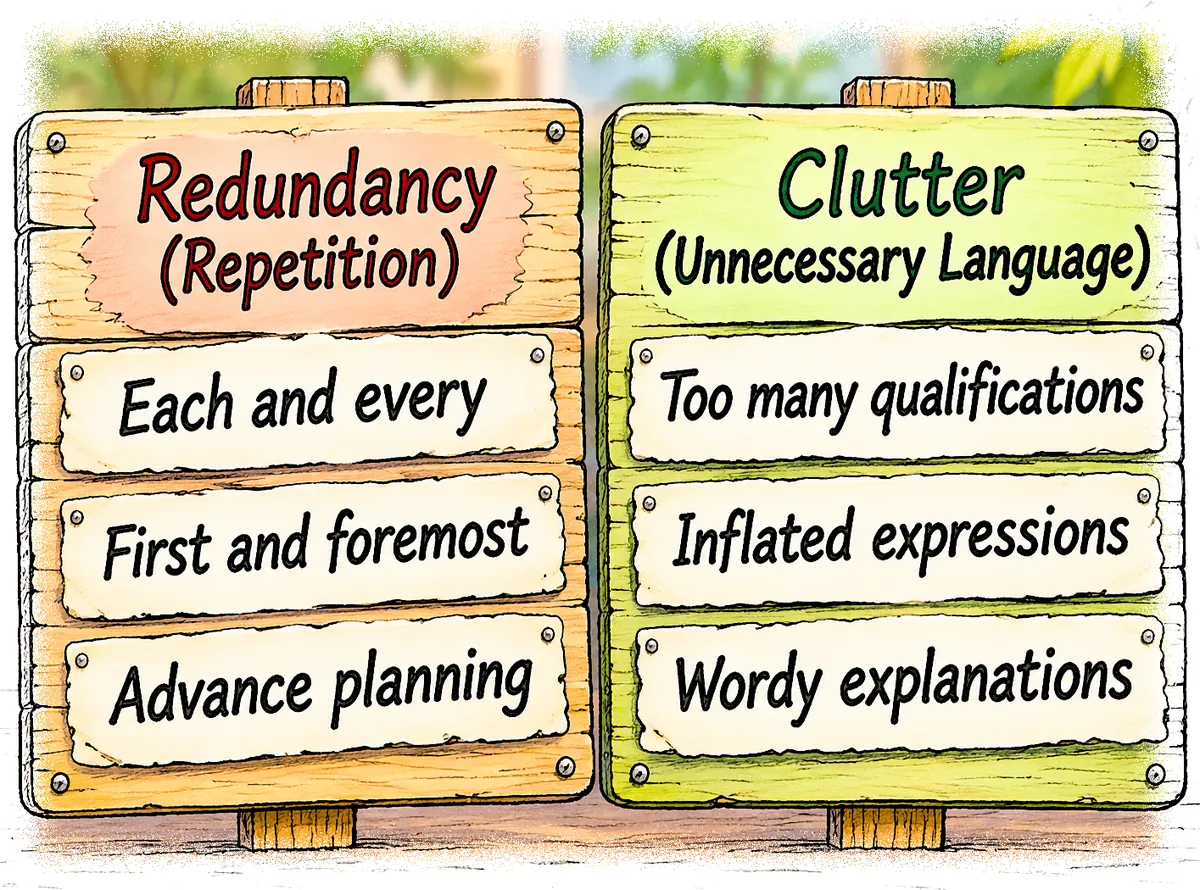
These terms are related, but they do not mean the same thing. Understanding their distinctions helps a writer develop a more deliberate approach to composition and editing.
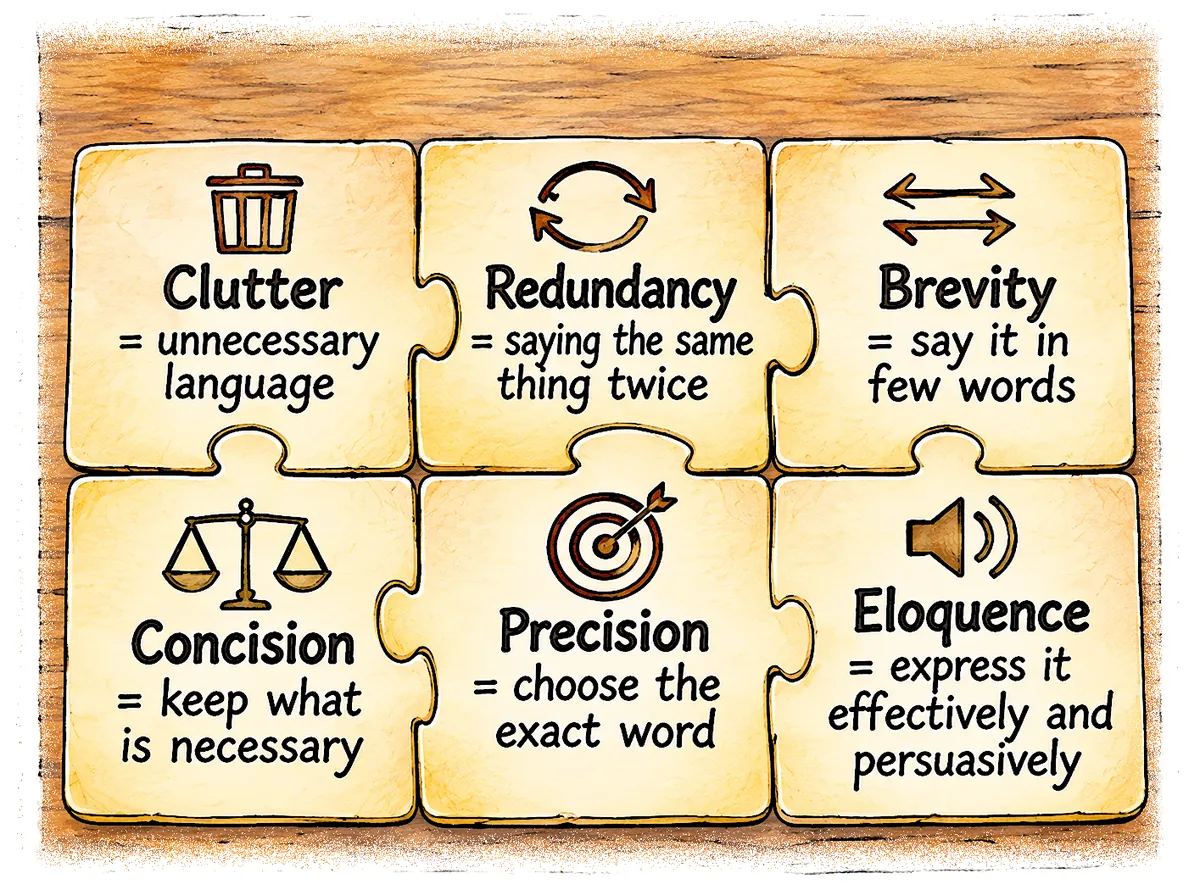
Redundancy occurs when the same meaning is expressed more than once without a sufficient reason. Consider expressions such as "each and every," "first and foremost" and "advance planning." In many contexts, one word or expression would suffice. Redundancy is therefore concerned with unnecessary repetition. However, repetition is not always a fault. It may be employed deliberately for emphasis, rhythm, persuasion or literary effect. The question is whether the repetition serves a purpose.
Clutter is the broader problem of unnecessary language obstructing meaning. Unlike redundancy, it does not always involve repetition. A sentence may communicate an idea only once and still be cluttered because it contains too many qualifications, inflated expressions or unnecessary words. Clutter makes writing cumbersome and can conceal the central thought.
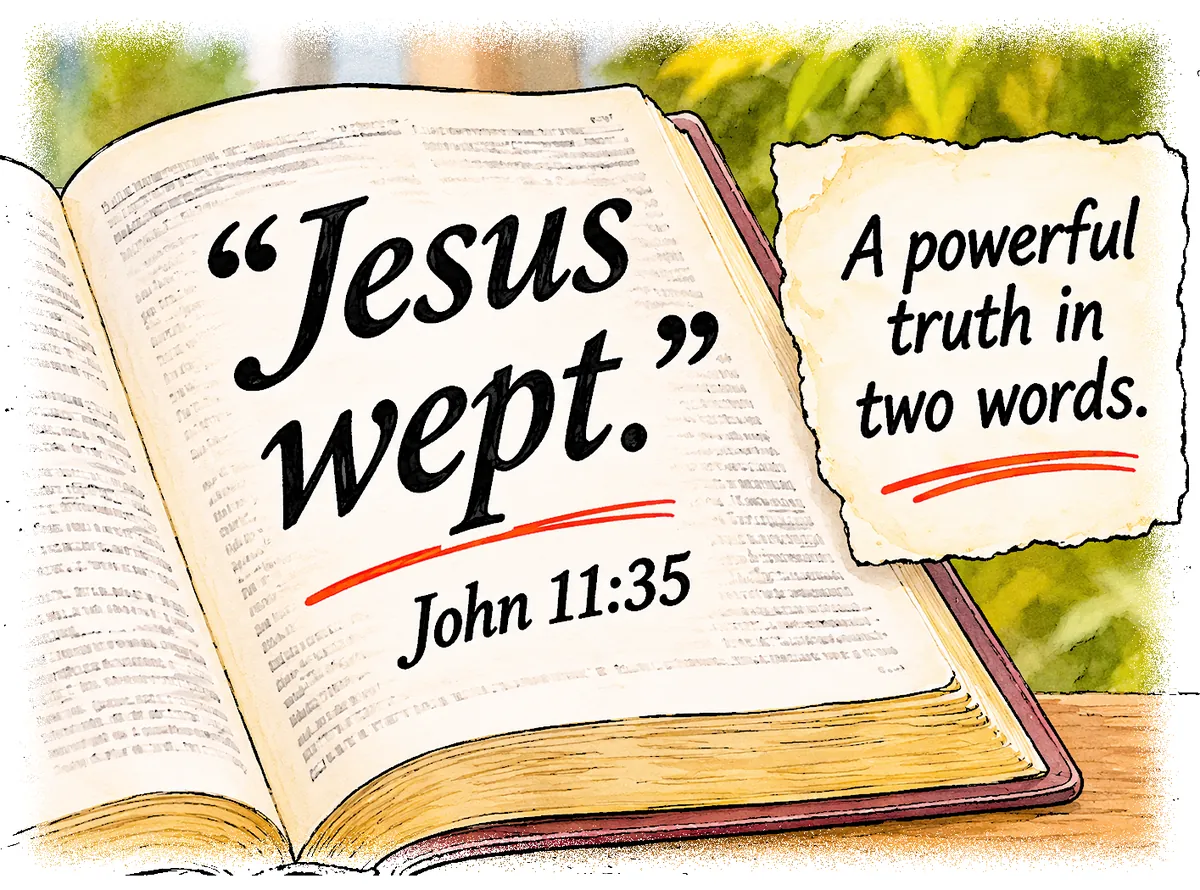
Brevity is the ability to express an intended thought in few words. It is the art of saying what needs to be said without unnecessarily prolonging the expression. Brevity often gives writing a sense of authority because the writer appears confident enough to make the point and allow it to stand. Consider the difference between "Jesus wept" and a lengthy description of His sorrow. The brevity of the biblical statement is part of its force. Yet brevity must not be confused with incompleteness. A writer should not sacrifice necessary explanation merely to achieve a shorter sentence.
Concision is the discipline of retaining what is necessary while removing what is not. It is closely related to brevity, but its emphasis is on economy rather than length alone. A concise passage may be relatively long if the subject demands detailed treatment. What makes it concise is that its words, sentences and paragraphs contribute meaningfully to the discussion. Concision is not about writing the least; it is about writing without waste.
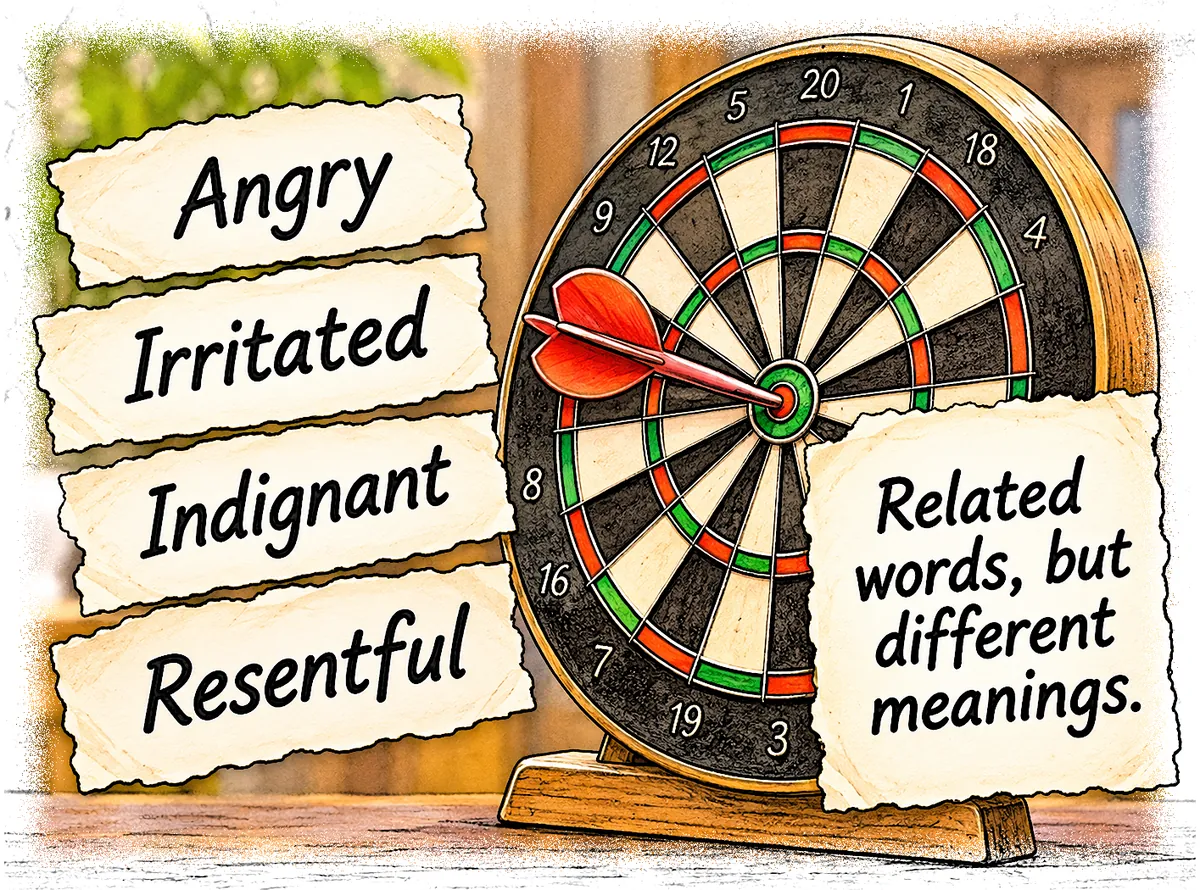
Precision is the ability to choose the exact word or expression that conveys the intended meaning. It requires more than selecting a short word. Sometimes, the most precise word is longer, less familiar or more technical. Consider the difference between "angry," "irritated," "indignant" and "resentful." These words are related, but they do not convey precisely the same state of mind. A writer who chooses words carelessly may produce a sentence that is brief but inaccurate. Precision ensures that economy does not come at the expense of meaning.
Eloquence is the effective, graceful and persuasive expression of thought. It is the quality that gives language its force, character and appeal. Eloquence may be found in a brief declaration, an intricately constructed sentence, a compelling argument or a carefully developed passage. It is not the mere accumulation of impressive vocabulary. Nor does it require elaborate language. True eloquence lies in the fitting expression of a thought, delivered in a manner that engages the understanding and, where appropriate, moves the reader.
These distinctions matter because a writer can be brief without being concise, concise without being eloquent, eloquent without being brief, and precise without using complicated language. The aim is not to pursue one quality at the expense of all the others, but to understand how they work together.
There is a certain authority in a person who knows how to say what needs to be said without labouring the point. Such a person does not have to exhaust a subject, parade an extensive vocabulary or surround an ordinary observation with elaborate expressions to establish command of language.
The ability to express a thought in few, well-chosen words often reveals considerable command of both the subject and the language. It takes judgement to know what can be omitted, precision to know what must remain, and confidence to resist the temptation to explain everything.
There is a difference between having little to say and knowing how to say much in little. The former may arise from an undeveloped thought; the latter often comes from careful consideration. A writer who has not yet settled upon an idea may continue writing in the hope that more words will eventually make the meaning clearer. A writer who understands the point can identify what matters and give it proper expression.
Nevertheless, brevity is not an absolute virtue. Some subjects require lengthy explanations, careful qualifications and detailed arguments. A theological exposition, historical account, legal analysis or personal memoir cannot always be reduced to a few sentences without losing important substance. There are also occasions when a longer sentence is necessary to establish rhythm, develop an argument or create a particular effect.
The question, therefore, is not whether a sentence is long or short, but whether its length is justified. Does it develop the thought? Does it provide necessary context? Does it create a particular effect? Or does it merely delay the point?
A writer must cultivate the discernment to know when to elaborate and when to stop. The ability to say more is useful; the ability to know when enough has been said is equally valuable.
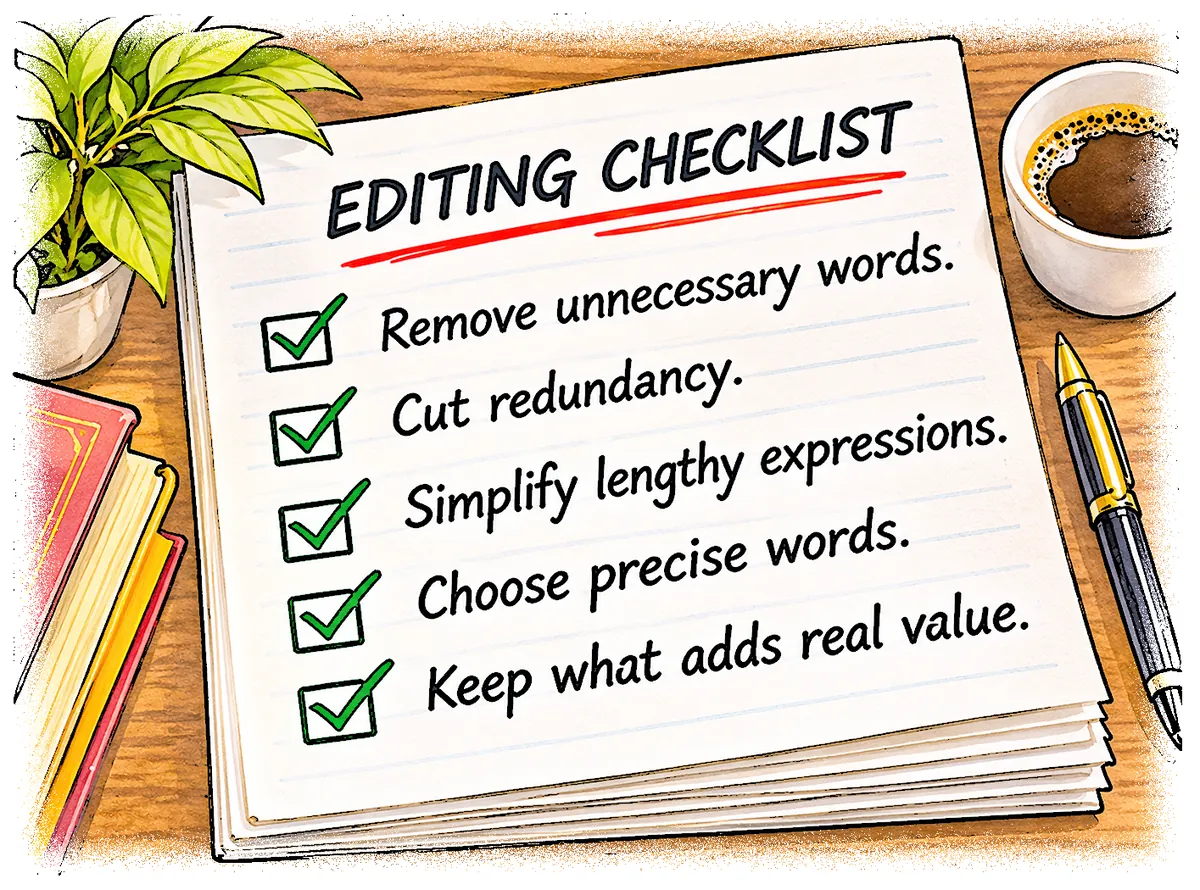
When reviewing your work, do not limit yourself to checking spelling, punctuation and grammatical correctness. Examine the construction of your sentences. Look for expressions that can be simplified, explanations that have outlived their usefulness and words that have been included out of habit rather than necessity.
Read your work aloud. Pay attention to the rhythm of the sentences and notice where the language becomes cumbersome. Ask yourself whether a particular expression is the most fitting one, whether a qualification is necessary and whether the reader has already received the information you are about to repeat.
Most importantly, do not become so attached to your expressions that you are unwilling to remove them. A sentence does not deserve to remain simply because it took considerable effort to compose.
Good editing requires judgement. It is not the indiscriminate removal of words, but the careful examination of their purpose. Sometimes, you will remove an entire sentence. At other times, you will retain a long sentence because its construction is essential to the thought. The objective is to make the writing more effective, not merely shorter.
Take a passage of approximately 300 words from something you have written. It could be an article, a report, a personal reflection or a chapter from your book.
Read it carefully and attempt to reduce it to approximately 200 words without sacrificing its central ideas or essential details. Look for clutter, redundancy, unnecessary qualifications and expressions that could be more precisely stated.
When you finish, compare both versions. Has the meaning been preserved? Is the shorter version easier to understand? Have you improved the precision of your expressions? Does the writing still retain your voice and character?
The aim is not to write the fewest words possible. It is to ensure that every word has a purpose, every sentence contributes to the thought and every paragraph advances the discussion.
That is the discipline of good writing.
Inspired by William Zinsser’s On Writing Well.
Layo Obidike
LO Publications

What New Authors in Canada Get Wrong About Book Marketing: A breakdown of Canadian publishing realities
September 4, 2026
7 Common Writing Mistakes
January 21, 2026

Book Marketing 101
January 21, 2026
Get the latest publishing, book marketing & writing craft insights.