
Yes! I am of the opinion that good writing comes from stripping every sentence to its cleanest parts. It is not always about finding more impressive words, constructing longer sentences or making an idea sound more sophisticated. Often, it is about taking away everything that stands between the writer and the reader.
A good writer knows what to leave out.
Every word that contributes nothing to the meaning, every long expression where a shorter one would do, and every sentence that takes too long to make its point weakens the writing. This does not mean that every sentence must be short or that every word must be simple. It means that each word must have a reason for being there.
This is also one of the things an editor looks out for when refining a manuscript: redundancy. When a word, phrase or sentence repeats what has already been sufficiently expressed, it serves little or no purpose. Worse still, it weakens the writing. It adds weight without adding substance. An editor must therefore be discerning enough to know what to retain, what to refine and what to remove altogether.
One of the common mistakes people make when writing is assuming that complexity makes them sound intelligent. We have been conditioned to associate formal, complicated language with education, authority and professionalism. As a result, we sometimes choose words not because they communicate our thoughts better, but because they make us sound more important.
Consider these expressions:
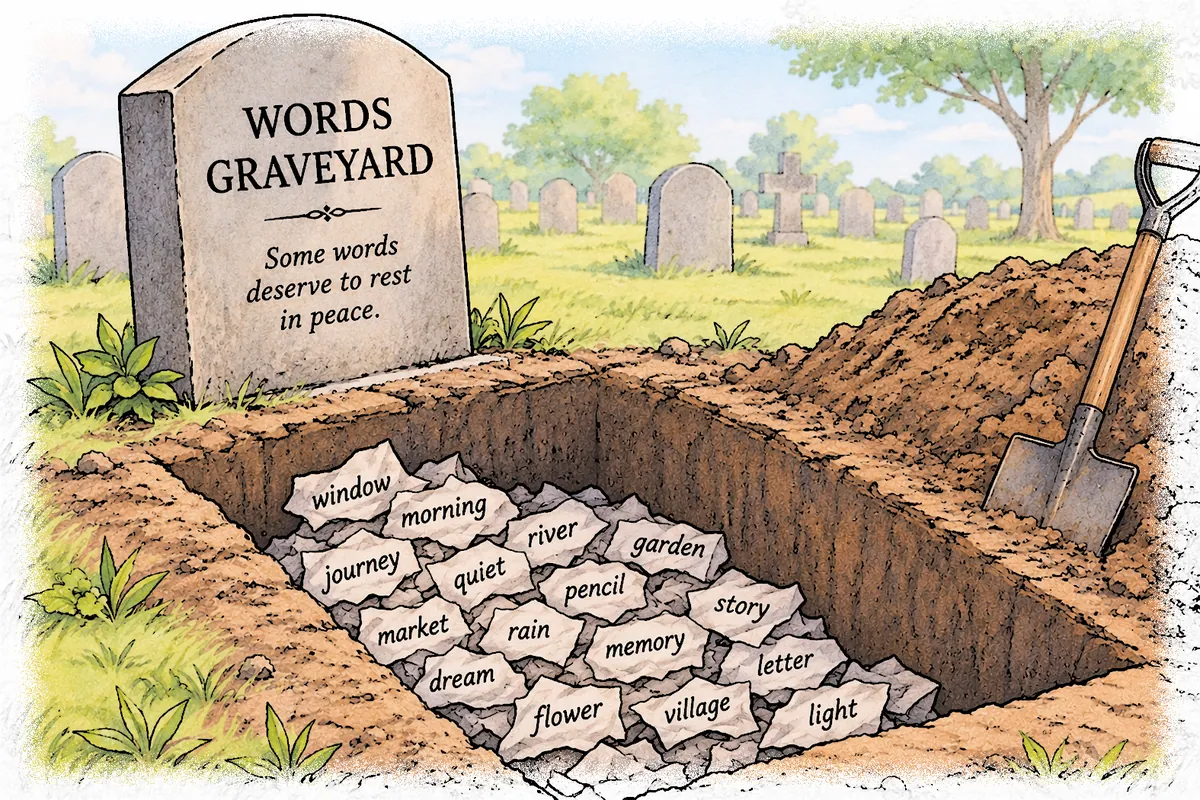
The longer expressions are not necessarily wrong. There are occasions when they are useful. The problem begins when we use them out of habit, without considering whether they add anything to the sentence.
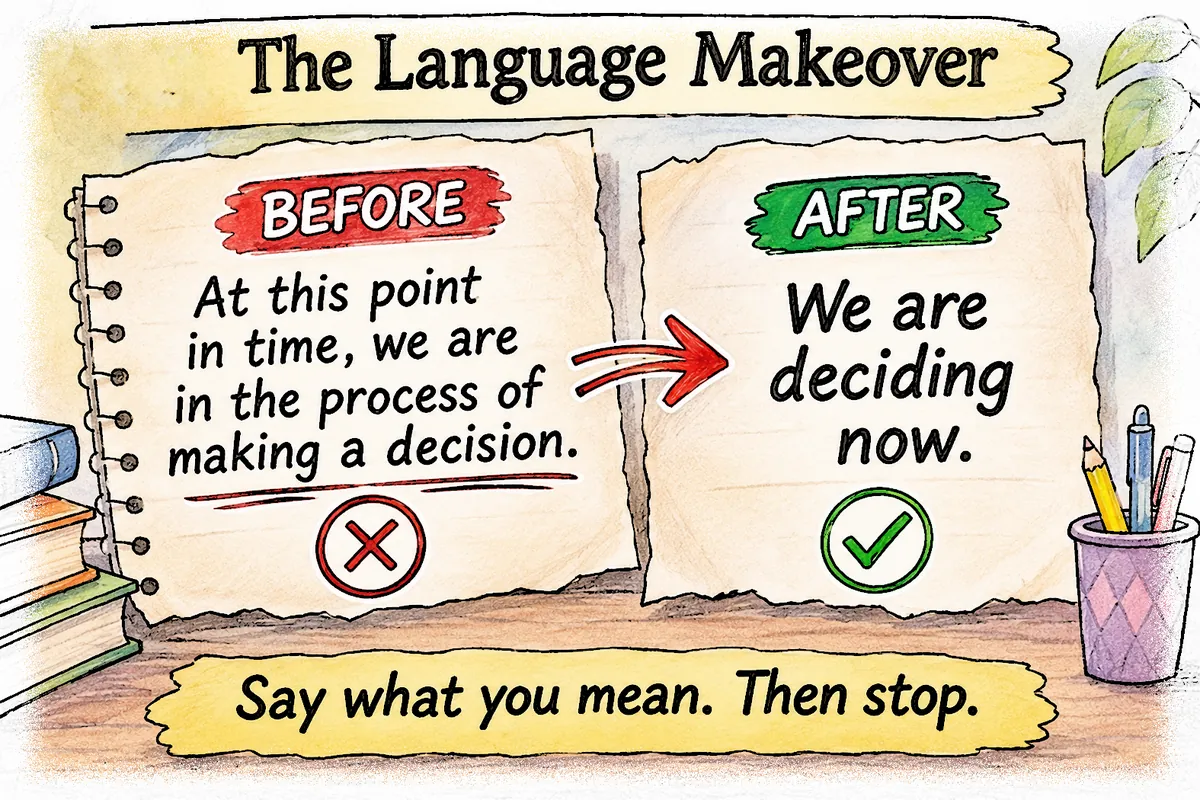
However, there is also a time to depart from concision. A writer must understand that brevity is not always the highest virtue in writing. There are occasions when a thought deserves to be developed at length, when a longer sentence serves a particular rhythm, when repetition is deliberately employed for emphasis, or when an unusual expression gives a piece its character. There is room for intricacy, style and even idiosyncrasy.
The point, therefore, is not to make every sentence as short as possible or to reduce every expression to its simplest form. That would be another kind of literary restriction. Rather, the writer must know what each choice is serving. Is the longer sentence adding depth, establishing rhythm or developing an important thought? Is the repetition deliberate, or have you simply said the same thing twice? Is the unusual word the most fitting word, or have you chosen it merely to impress?
There is a marked distinction between deliberate complexity and needless complication. A good writer knows the difference. Not every elaborate sentence is well written, nor is every brief sentence an example of good writing. The true art lies in knowing what the occasion demands. A sentence ought not to impose upon the reader the unnecessary labour of deciphering what the writer could have expressed plainly.
Consider those who read your work. They have their own responsibilities, conversations, deadlines, families and sundry matters demanding their attention. They do not open a book or an article in the hope of being confronted with a riddle. They come to understand something, acquire knowledge, enjoy a story or find an answer. Their attention is valuable, and a writer who squanders it through needless obscurity does the reader a disservice. When the meaning is needlessly obscured, the reader may simply lay the work aside.
A writer must therefore be mindful of the reader's patience and understanding. It is not enough to have something worthwhile to say; one must also give due consideration to how it is said. The object is not merely to display the writer's command of language, but to convey the thought with such clarity that the reader can apprehend it without undue exertion.
There is a distinction between simplicity of expression and poverty of thought. The former is often a mark of mastery; the latter, a limitation of understanding.
A difficult subject may be communicated in plain language without diminishing its depth. Indeed, the ability to expound upon a weighty matter in words that are readily understood is often evidence that the writer has thoroughly apprehended the subject. When you understand an idea, you ought to be able to discern its central truth and convey it without taking refuge in needless verbiage.
Consider the King James Version of the Bible. Its language is not always readily understood by the modern reader, and its sentences are by no means uniformly short. Yet many of its most memorable passages convey profound truths through words of remarkable simplicity and force.
Consider these words from John 11:35:
"Jesus wept."
Two words, and yet what depth of meaning they bear! They speak of the humanity of Christ, His compassion and His response to the sorrow of others. There is no elaborate explanation, no abundance of adjectives and no lengthy description. The statement is brief, but its significance is considerable.

The strength of that sentence lies not in the number of words employed, but in the weight of meaning they carry.
Good writing is not measured by the quantity of language a writer can summon to fill a page, but by the measure of thought and meaning conveyed through it. It is not the abundance of words that distinguishes a good writer, but the judicious employment of them.
When you finish a draft, resist the temptation to assume that it is ready simply because you have reached the last paragraph. The first draft is an opportunity to get your thoughts down. Revision is where you begin to examine how well those thoughts have been expressed.

Read each sentence again. Look for words that can be removed without changing the meaning. Look for expressions that can be shortened. Pay attention to sentences that repeat an idea already communicated in the previous sentence.
For example:
"The reason why I decided to leave was because I felt that I was no longer making progress."
This can become:
"I left because I was no longer making progress."
The second sentence communicates the same idea with fewer words. It is direct, easier to read and leaves no doubt about what happened.
Consider another example:
"It is important for every writer to make sure that they take the time to carefully review their work before submitting it."
A more concise rendering would be:
"Every writer should review their work carefully before submitting it."
Nothing of consequence has been lost. The sentence has merely been relieved of its excess baggage. Its meaning remains intact, but its expression is more direct and assured. This is the very essence of good editing: to remove what is superfluous without diminishing what is essential.
There are certain disciplines a writer must cultivate when reviewing a manuscript. The first is to pay attention to the verbs. A sentence may be grammatically sound and yet lack vigour because its principal verb is weak. Consider the difference between "She made an announcement" and "She announced." The latter is more direct, more economical and, in most contexts, more effective. A writer ought therefore to examine the action within each sentence and ask whether it can be expressed with greater precision and force.
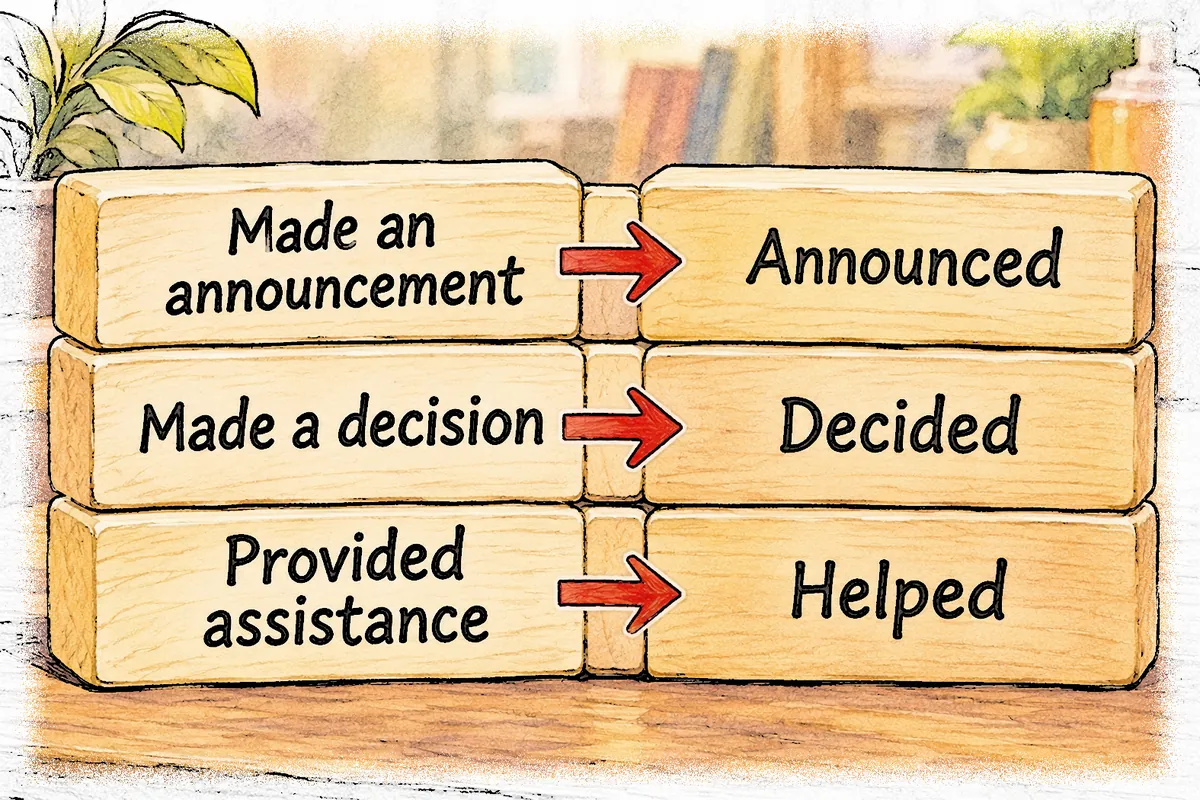
The same discernment should be applied to vocabulary. Do not reach for an elaborate word when a familiar one conveys the thought more aptly. "Use" may serve better than "utilise"; "help" may be preferable to "assist"; and "about" may be more fitting than "with regard to." This is not an injunction to abandon an extensive vocabulary. Far from it. It is an appeal to exercise sound judgement in its employment. A rich vocabulary is an asset, but the indiscriminate use of it can become a liability.
Sentence construction also deserves careful attention. Some writers are so intent on accommodating every thought within a single sentence that they leave the reader struggling to follow the argument. A sentence may contain several clauses, qualifications and subordinate thoughts, but unless these elements are properly ordered, the meaning becomes obscured. Long sentences are not inherently defective; some of the finest prose ever written is characterised by lengthy, intricately constructed sentences. The question is whether the construction serves the thought or obstructs it. Where a sentence has become unwieldy, consider dividing it. Where its length contributes to rhythm, emphasis or the gradual unfolding of an idea, let it remain.
Then comes the matter of repetition. There is a place for repetition in good writing. It may be employed as a rhetorical device to establish emphasis, reinforce an argument or create a particular cadence. But there is a marked difference between purposeful repetition and inadvertent redundancy. The former is a literary instrument; the latter is an editorial failing. Do not reiterate a point merely because you fear that the reader has not understood it. Once an idea has been sufficiently expressed, have the confidence to proceed.
Above all, learn to interrogate your own sentences. What exactly am I trying to communicate? Is this the most fitting expression? Does this qualification add anything to the argument? Could the same thought be conveyed more clearly without sacrificing its depth or character? Such questions may appear elementary, but they are among the most valuable instruments in a writer's craft.
One further discipline is worth cultivating: read your work aloud. The eye can become accustomed to a sentence, particularly after several rounds of revision, and overlook its deficiencies. The ear, however, may detect an awkward construction, an ill-fitting word, an abrupt transition or an unnecessary repetition. What appears acceptable on the page may sound quite cumbersome when spoken. Reading aloud is therefore not merely an exercise in proofreading; it is a means of testing the rhythm, coherence and natural cadence of your prose.
When I used to teach English Language, one of the tricks I taught my students was to become their own examiners. I encouraged them to scrutinise their answers, question their choice of words, examine their sentence construction and look out for errors before submitting their work. I must confess that this little discipline often saved them some marks.
It is a habit I still consider invaluable. Unfortunately, it requires a little more discipline in this age of convenience, where predictive text, spellcheckers and other writing aids have made it tempting to surrender some of our editorial responsibilities to technology. These tools are useful, no doubt, but they are not infallible. They may correct a misspelt word while overlooking an ill-constructed sentence; they may approve a grammatically permissible expression that is entirely unsuitable in its context. They can assist the writer, but they cannot wholly supplant the writer's judgement.
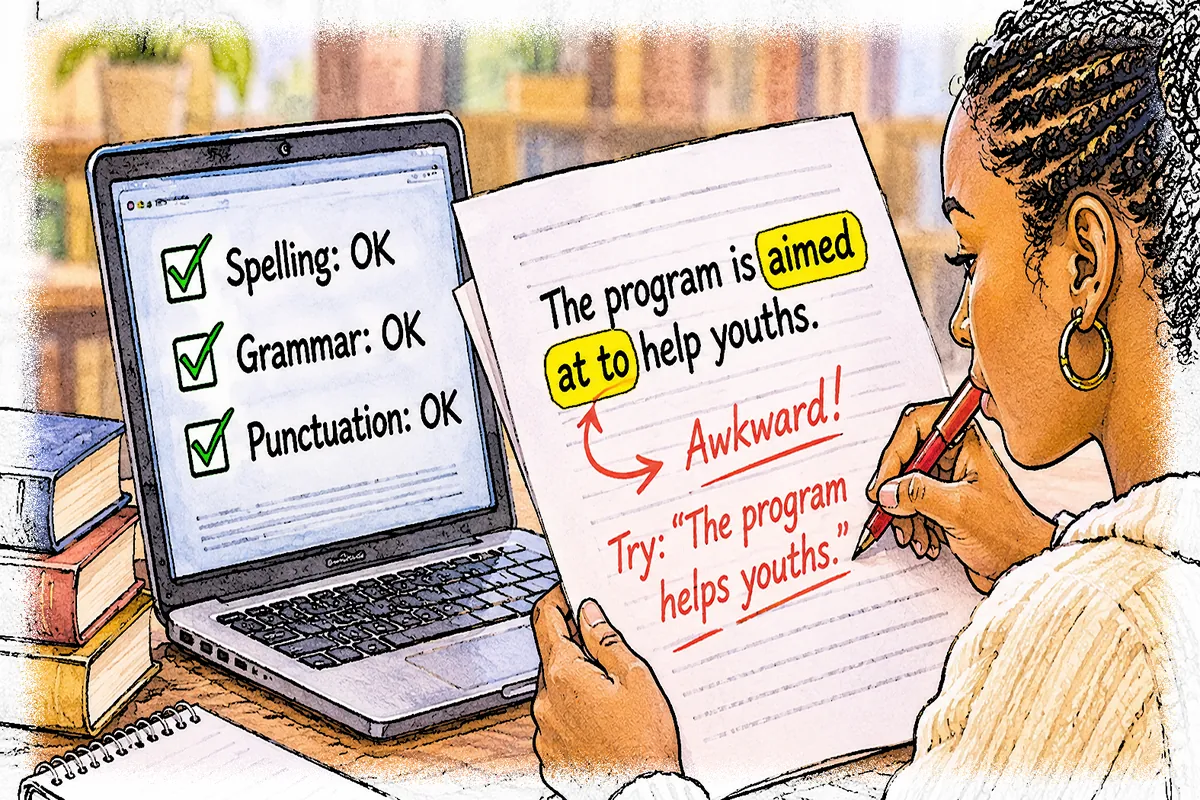
One of the reasons people struggle to improve their writing is that they become unduly attached to what they have written. They have spent time finding an expression, constructing a sentence or developing a paragraph, and when the time comes to revise it, they find it difficult to part with any of it. They mistake the labour of composition for the merit of the finished work.
But a sentence does not merit preservation merely because you laboured over it.
Your responsibility is not to defend every word you have written, but to ensure that what remains communicates your thought with clarity and distinction. Sometimes, the most judicious improvement you can make to a paragraph is to excise an entire sentence. At other times, a sentence may require complete reconstruction. You may even discover that a paragraph into which you poured considerable time and effort contributes nothing substantial to the argument and is better removed altogether.
This is not a loss. It is the very discipline of revision.
A good writer must cultivate the discernment to distinguish between what is worth retaining and what must be relinquished. The ability to write is important, but the ability to revise is equally indispensable. Good writers do not merely know what to put upon the page; they also know what ought not to remain upon it.
Take a passage of approximately 300 words from something you have written. It may be an article, a report, a personal reflection or a chapter from a book. Read it carefully, paying particular attention to expressions that are unnecessarily elaborate, sentences that repeat an earlier thought and paragraphs that could be made more direct.
Now attempt to reduce the passage to approximately 200 words without sacrificing its central ideas, essential details or intended meaning. Do not merely strike out sentences to meet the word count. Examine the construction of the writing. Replace cumbersome expressions, remove needless qualifications, eliminate redundancy and reconstruct sentences where necessary.
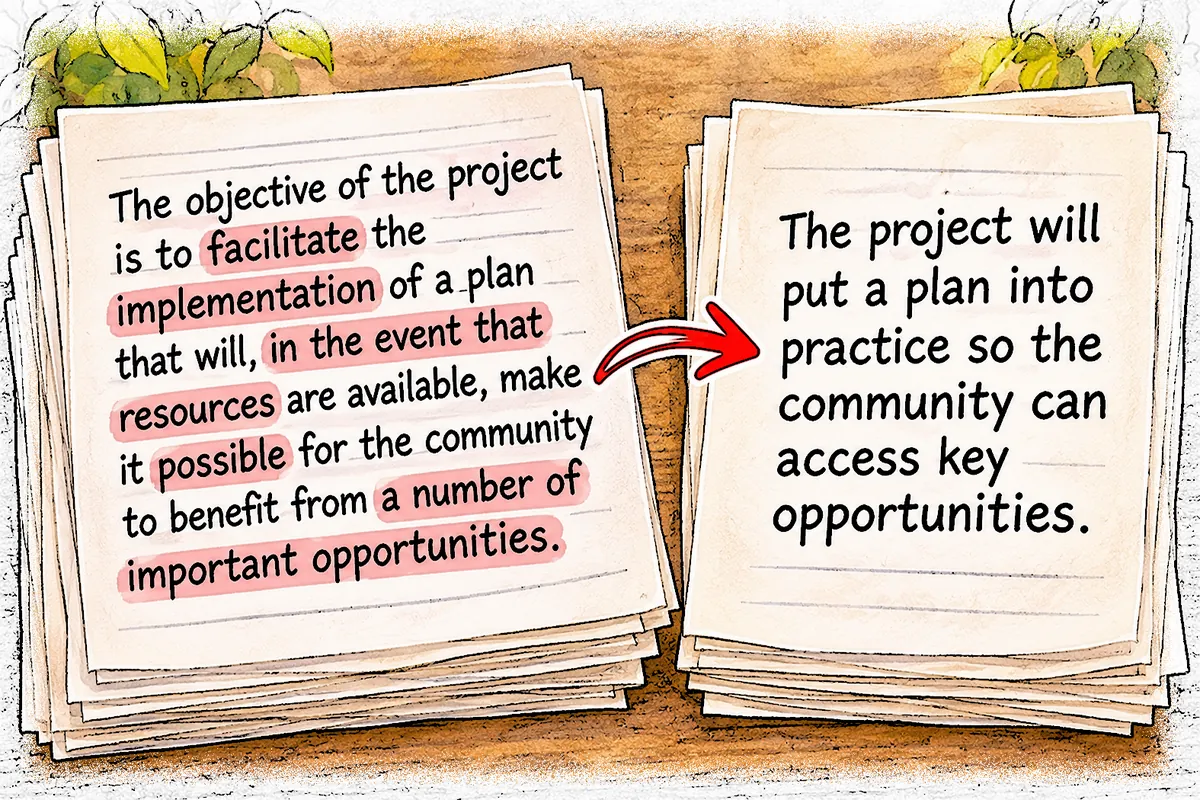
When you have finished, place both versions side by side and examine them. Is the shorter version clearer? Has any important meaning been lost? Does the argument still hold together? Have you preserved your own voice and style? Most importantly, does every remaining sentence justify its place?
You may discover that the exercise is more demanding than you anticipated. It takes considerable discernment to remove words without removing meaning. But that is precisely the discipline you are seeking to develop.
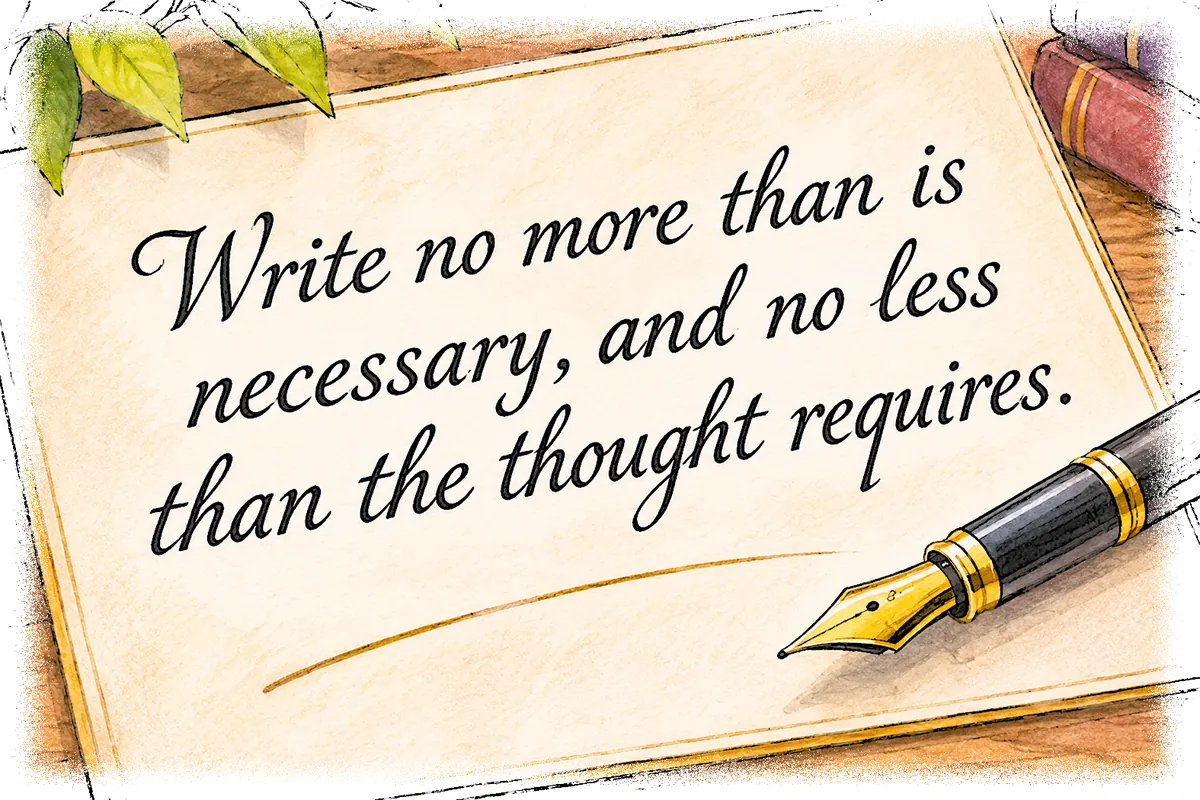
The object is not to write as little as possible. It is to write no more than is necessary, and no less than the thought requires. That, perhaps, is one of the enduring secrets of good writing.
Inspired by William Zinsser’s On Writing Well.
Layo Obidike
LO Publications

What New Authors in Canada Get Wrong About Book Marketing: A breakdown of Canadian publishing realities
September 4, 2026

7 Common Writing Mistakes
January 21, 2026

Book Marketing 101
January 21, 2026
Get the latest publishing, book marketing & writing craft insights.